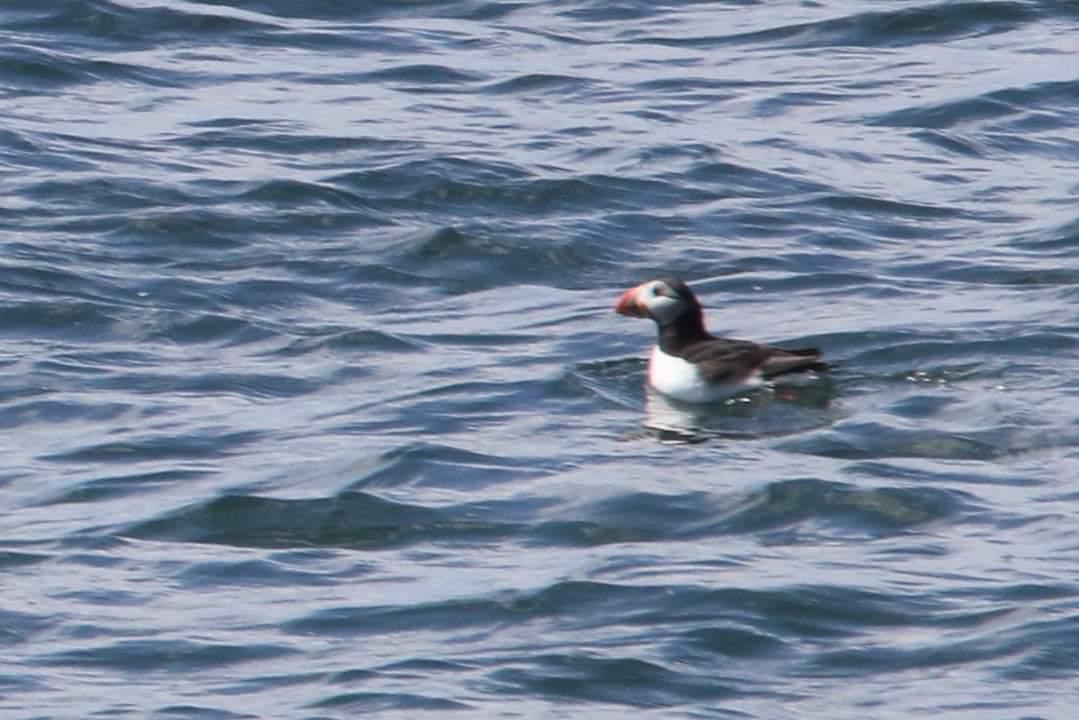
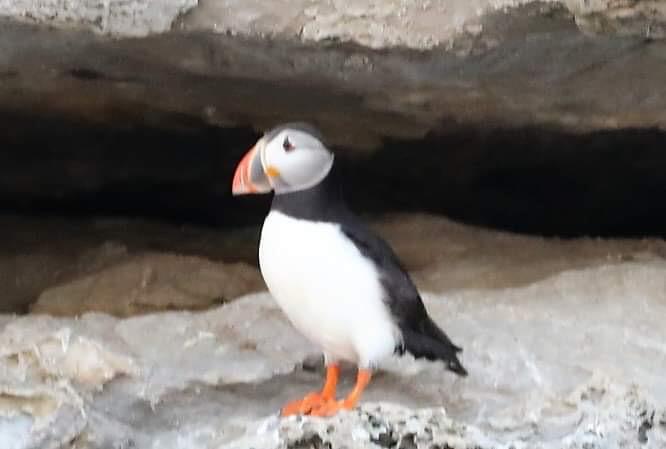
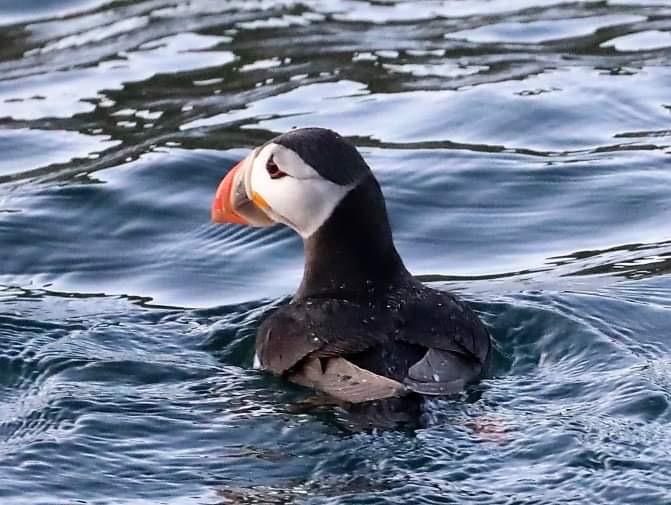
There’s something about puffins that makes people smile. With their colourful beaks, waddling walk and slightly comical personalities, it’s no wonder they’ve become one of the UK’s most-loved seabirds.
If you’ve ever joined us along the Jurassic Coast on our Birdwatching Cruises, you’ll know that wildlife spotting is half the adventure — and while puffins aren’t everyday visitors, learning about these charming birds makes spotting one even more special.
So, let’s dive into the wonderful world of puffins and discover what makes them such unforgettable characters of the sea.
Puffin Basics
With their bold markings, brightly coloured bills and unmistakable waddle, puffins are often nicknamed “clowns of the sea” — and once you’ve seen one, it’s easy to see why.
They belong to the auk family, alongside guillemots and razorbills, and although male and female puffins look almost identical, the males are usually just a little bigger.
One thing that surprises many people is just how long puffins live. These little seabirds can live over 20 years, with some recorded reaching 30 years old — not bad for a bird that stands at just under 30cm tall!
Masters of the Water
While puffins might look slightly awkward on land, they’re incredibly agile underwater.
Their wings act like flippers, powering them through the water at speed while their feet steer — making them brilliant hunters. They can dive to impressive depths of up to 60 metres (around 200 feet) in search of food.
And when they surface? That’s when the magic happens. Puffins are famous for returning with beaks full of fish — sometimes carrying dozens of small sand eels at once to feed their chicks.
Their diet usually includes:
Sand eels
Small squid
Herring
Sardines
They may be cute, but they’re seriously skilled fishermen.
Breeding Season and Colourful Beaks
Puffins truly come into their own during breeding season.
Throughout the winter months, their colourful beaks fade to a duller grey. But as spring approaches, the bright orange, yellow and blue colours return — just in time for nesting season.
When puffins return to their breeding colonies, they get straight to work preparing their homes. Instead of nesting on cliffs like many seabirds, puffins dig burrows in the ground, much like rabbits. Inside these cosy tunnels, a single egg is laid and carefully protected.
You might also spot one of puffins’ sweetest behaviours — something called “billing.”
This is when a pair gently rub their beaks together, strengthening their bond. Puffins return to the same partner year after year, making them one of the more romantic birds of the sea.
Meet the Puffling
Yes — baby puffins really are called pufflings, and it’s every bit as adorable as it sounds.
After about 40 days of incubation, a puffling hatches — a tiny charcoal-coloured ball of fluff that looks nothing like the colourful adults.
Over the next several weeks, both parents work tirelessly to bring back fish, sometimes travelling miles to find the best feeding spots. Along the way, they may have to dodge opportunistic birds like gulls, who try to steal their catch — a behaviour known as kleptoparasitism (a fancy word for food theft!).
Once the puffling grows strong enough, it eventually emerges from its burrow and makes its first slightly wobbly journey down to the sea — the beginning of life on the water.
Fun Puffin Facts
Here are a few favourites we love sharing with guests onboard:
A baby puffin is called a puffling
Puffins grow to just under 30cm tall
Their beaks can glow under UV light
Their colourful beaks turn dark in winter
They’re often nicknamed the “clowns of the sea”
They can dive to depths of up to 60 metres
When Is the Best Time to See Puffins?
Puffins are typically seen around UK coasts during the spring and summer months, when they return to land to breed and raise their young. Here in Dorset they are usually seen at Dancing Ledge between April – July.
This is when their colourful beaks are at their brightest, and when you’re most likely to spot them carrying fish back to their burrows — one of the most memorable sights in British wildlife.
Wildlife Moments That Stay With You
One of the joys of being out on the water is the chance to connect with nature in a way you simply can’t from land. Whether it’s seabirds gliding overhead, dolphins breaking the surface, or the lucky sighting of a puffin, these moments are often the ones people remember most.
So next time you’re out on the water, keep your eyes peeled — you never know when one of these colourful little characters might pop into view.
And if you do spot one? Trust us… it’ll be a moment you won’t forget.
If you want to join us we are running cruises from 8th May – 26th June on Friday evenings to view the wildlife of the Jurassic Coast. www.coastalcruisespoole.co.uk/bird-watching-cruise