Vikings, Kings & Stormy Seas: The Epic Tale of Wareham and Poole Harbour
If you’ve ever visited the peaceful Dorset town of Wareham, you might think it’s always been a quaint little spot to sip tea and watch the River Frome flow by. But over 1,100 years ago, this place was anything but peaceful. It was a hotbed of tension, war, and invasion — a frontline between Viking raiders and Saxon defenders.
And what connected it all? The winding, tidal waters of Poole Harbour — including the now-serene Wareham Channel.
🌿 Setting the Scene: Saxon England
In the 9th century, Wareham was already a well-established town. It had royal connections, two mints producing coinage, and had even been chosen as the final resting place for King Beorhtric in 802 AD. Wareham was no backwater — it was a serious Saxon stronghold.
Recognizing its strategic importance, King Alfred the Great fortified the town as part of his defensive network known as the burhs — a system of walled towns designed to hold off Viking invaders. Wareham’s defensive banks, made of earth and timber, were impressive even by today’s standards. Parts of them still survive.
But Alfred’s preparations were soon put to the test…
⚔️ Enter the Vikings: Guthrum’s Big Move
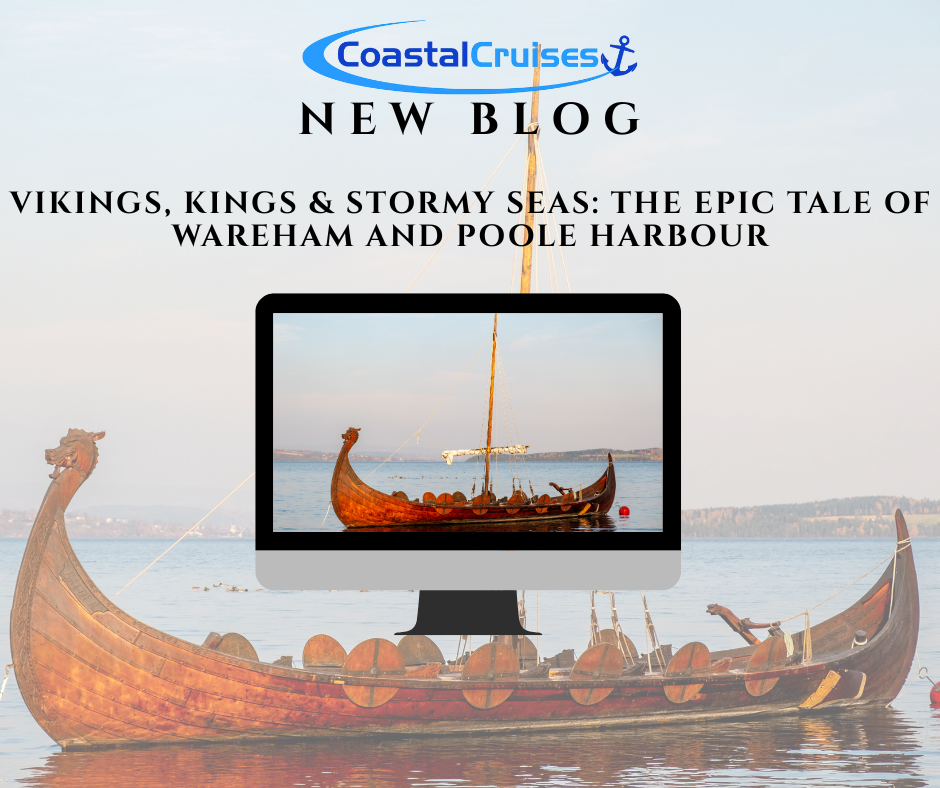
In 876 AD, Guthrum, one of the most formidable Viking warlords of the time, sailed his longships into Poole Harbour. It’s easy to imagine the sleek, dragon-headed boats slicing through the water, using the Wareham Channel and the River Frome to access the town.
With speed and surprise on his side, Guthrum’s forces captured Wareham, turned out the Saxons, and fortified the town for themselves. This wasn’t a smash-and-grab raid — this was a full-on occupation. Monasteries were dissolved, local leaders displaced, and the town became a key base for the Great Heathen Army, the combined Viking forces sweeping across England.
🧠 Alfred’s Gambit: Danegeld and Betrayal
King Alfred, ever the tactician, knew that a full-scale assault on Wareham might backfire. Instead, he negotiated a treaty with Guthrum. The Vikings were paid off with a hefty sum — Danegeld, literally “Dane money” — in exchange for peace and a promise to leave.
You can probably guess what happened next.
Guthrum broke the treaty within months. He slipped away from Wareham under cover of night, evading Saxon patrols and regrouping to fight another day. Alfred had been outfoxed — but not for long.
🌊 Nature Turns the Tide
When Guthrum tried to retreat from Wareham by water, sailing again through the Wareham Channel and out of Poole Harbour, he ran into a force no Viking could beat: a raging storm. Accounts tell of Viking ships being wrecked in the harbour — some sunk, others scattered by high winds and furious waves. A natural disaster turned a strategic withdrawal into a devastating loss. Guthrum eventually regrouped, but this episode showed that even the sea could take sides.
🏰 Wareham Today: Echoes of a Violent Past
Today, Wareham is a charming town of tearooms, pubs, and riverside walks — but if you know where to look, the past is still alive:
- The Saxon earthen walls still encircle parts of the town — among the best preserved in England.
- The Wareham Channel, once a Viking route of invasion, now hosts kayakers, sailing boats, and paddleboarders and the odd passenger boat!.
- Local names, folklore, and historical markers keep the memory of the town’s dramatic Viking era alive.
You can literally walk where Saxon warriors and Viking raiders once clashed, and see the very waters where history was made (and where Guthrum’s retreat turned into a soggy disaster).
🧭 Why It Matters
The saga of Wareham and the Vikings isn’t just a cool footnote in local history — it’s part of the foundation of modern England. The struggle between King Alfred and Viking invaders shaped the very idea of a united English kingdom.
Wareham’s survival, and Alfred’s eventual victories, helped push back the Viking tide and laid the groundwork for the future of Wessex — and eventually, England itself.
So next time you’re in Dorset, take a stroll through Wareham. Stand on its ancient walls. Look out over the Poole Harbour waters. And imagine the sails of a Viking fleet on the horizon…
Vikings, Kings & Stormy Seas: The Epic Tale of Wareham and Poole Harbour
If you’ve ever visited the peaceful Dorset town of Wareham, you might think it’s always been a quaint little spot to sip tea and watch the River Frome flow by. But over 1,100 years ago, this place was anything but peaceful. It was a hotbed of tension, war, and invasion — a frontline between Viking raiders and Saxon defenders.
And what connected it all? The winding, tidal waters of Poole Harbour — including the now-serene Wareham Channel.
🌿 Setting the Scene: Saxon England
In the 9th century, Wareham was already a well-established town. It had royal connections, two mints producing coinage, and had even been chosen as the final resting place for King Beorhtric in 802 AD. Wareham was no backwater — it was a serious Saxon stronghold.
Recognizing its strategic importance, King Alfred the Great fortified the town as part of his defensive network known as the burhs — a system of walled towns designed to hold off Viking invaders. Wareham’s defensive banks, made of earth and timber, were impressive even by today’s standards. Parts of them still survive.
But Alfred’s preparations were soon put to the test…
⚔️ Enter the Vikings: Guthrum’s Big Move
In 876 AD, Guthrum, one of the most formidable Viking warlords of the time, sailed his longships into Poole Harbour. It’s easy to imagine the sleek, dragon-headed boats slicing through the water, using the Wareham Channel and the River Frome to access the town.
With speed and surprise on his side, Guthrum’s forces captured Wareham, turned out the Saxons, and fortified the town for themselves. This wasn’t a smash-and-grab raid — this was a full-on occupation. Monasteries were dissolved, local leaders displaced, and the town became a key base for the Great Heathen Army, the combined Viking forces sweeping across England.
🧠 Alfred’s Gambit: Danegeld and Betrayal
King Alfred, ever the tactician, knew that a full-scale assault on Wareham might backfire. Instead, he negotiated a treaty with Guthrum. The Vikings were paid off with a hefty sum — Danegeld, literally “Dane money” — in exchange for peace and a promise to leave.
You can probably guess what happened next.
Guthrum broke the treaty within months. He slipped away from Wareham under cover of night, evading Saxon patrols and regrouping to fight another day. Alfred had been outfoxed — but not for long.
🌊 Nature Turns the Tide
When Guthrum tried to retreat from Wareham by water, sailing again through the Wareham Channel and out of Poole Harbour, he ran into a force no Viking could beat: a raging storm. Accounts tell of Viking ships being wrecked in the harbour — some sunk, others scattered by high winds and furious waves. A natural disaster turned a strategic withdrawal into a devastating loss. Guthrum eventually regrouped, but this episode showed that even the sea could take sides.
🏰 Wareham Today: Echoes of a Violent Past
Today, Wareham is a charming town of tearooms, pubs, and riverside walks — but if you know where to look, the past is still alive:
- The Saxon earthen walls still encircle parts of the town — among the best preserved in England.
- The Wareham Channel, once a Viking route of invasion, now hosts kayakers, sailing boats, and paddleboarders and the odd passenger boat!.
- Local names, folklore, and historical markers keep the memory of the town’s dramatic Viking era alive.
You can literally walk where Saxon warriors and Viking raiders once clashed, and see the very waters where history was made (and where Guthrum’s retreat turned into a soggy disaster).
🧭 Why It Matters
The saga of Wareham and the Vikings isn’t just a cool footnote in local history — it’s part of the foundation of modern England. The struggle between King Alfred and Viking invaders shaped the very idea of a united English kingdom.
Wareham’s survival, and Alfred’s eventual victories, helped push back the Viking tide and laid the groundwork for the future of Wessex — and eventually, England itself.
So next time you’re in Dorset, take a stroll through Wareham. Stand on its ancient walls. Look out over the Poole Harbour waters. And imagine the sails of a Viking fleet on the horizon…